



Description
About the book
In an age where digital platforms shape public perception more than ever before, Digital War – A Stand Against Anti-Islamic Narratives in Video Games by Hafsa Anwar courageously addresses a rising concern in the gaming world — the subtle but powerful spread of anti-Islamic narratives through video games.
This groundbreaking book sheds light on how Muslims and Islamic values are often misrepresented in mainstream gaming content. Through meticulous analysis and sharp critique, the author uncovers how negative stereotypes — such as portraying Muslims as terrorists, villains, or radicals — have been embedded in popular titles over the years. These narratives may seem fictional, but their influence on players’ beliefs and societal attitudes is profound and long-lasting. Blending academic insight with social awareness, Digital War explores how these portrayals contribute to growing Islamophobia, especially among younger audiences who absorb these digital impressions daily. Hafsa Anwar not only critiques the problem but also redefines what it means to fight a “war” in the 21st century — not with weapons, but with narratives, perceptions, and digital influence.
From defining the concept of “digital war” to exploring how Islamic teachings, identity, and culture are often misrepresented or disrespected, the book presents a timely wake-up call for game developers, media regulators, and conscious consumers alike. It calls for greater accountability, religious sensitivity, and fair representation in one of the most influential entertainment mediums of our era. Whether you’re a gamer, a media analyst, a parent, or a concerned global citizen, Digital War is an eye-opening read that empowers you to recognize the hidden biases in digital storytelling — and urges you to stand up for narrative justice.
Join the movement. Read the truth. Demand fair play.
About the Author
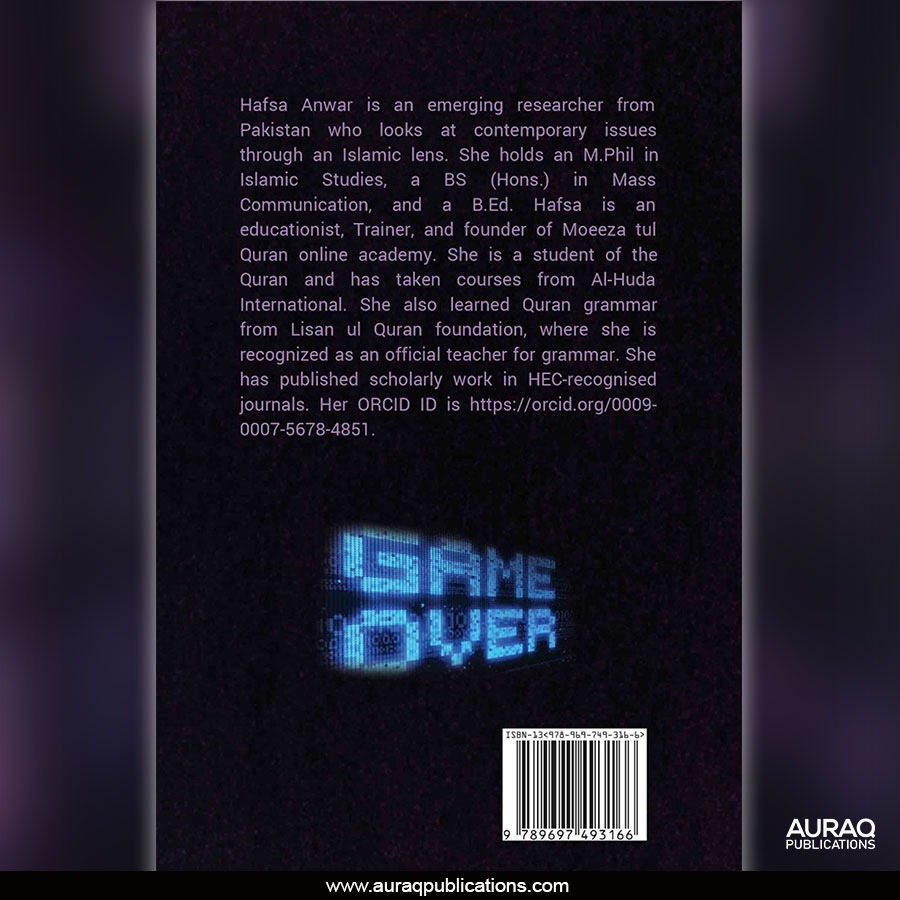
Hafsa Anwar holds an M.Phil in Islamic Studies, a BS (Hons) in Mass Communication, and a B.Ed. She is an emerging researcher from Pakistan who looks at contemporary issues through an Islamic lens. Hafsa is an educationist, Trainer, and founder of Moeeza Tul Quran Academy. She is a Student of Quranic translation and grammar and actively engages in community service.
In this book, the author critically analyzes anti-Islamic narratives in video games of the 21st century. The book provides a Quranic Framework to identify what is anti-Islamic and provides cases reported in famous video games worldwide. The author believes that it is high time we understood religious harmony and respect across the globe. She also believes that awareness regarding anti-Islamic content should be generated among the players so that they may identify those narratives within video games while playing them. She has given a wake-up call to the world’s gaming companies and regulatory authorities to check this medium of entertainment proactively.


Syeda Saba Riaz –
کتاب کا عنوان اور مصنفہ:
کتاب کا نام “ڈیجیٹل وار: ویڈیو گیمز میں اسلام مخالف بیانیے کے خلاف ایک مؤقف – انصاف پر مبنی کھیل کے لیے آواز” ہے جسے حفصہ انور نے تحریر کیا ہے۔ اس کا پہلا ایڈیشن مارچ 2025 میں پاکستان میں “اوراق پبلیکیشنز” کے تحت شائع ہوا۔
مرکزی خیال اور دلیل:
کتاب کا مرکزی موضوع “ڈیجیٹل وار” یعنی وہ جنگ ہے جو سوشل میڈیا، ٹیکنالوجی اور آن لائن پلیٹ فارمز کے ذریعے اسلام کے خلاف لڑی جا رہی ہے۔ مصنفہ کا مؤقف ہے کہ 21ویں صدی کی ویڈیو گیمز میں جان بوجھ کر ایسے بیانیے شامل کیے جا رہے ہیں جو اسلام کے بارے میں غلط فہمیاں، تعصبات اور منفی نظریات کو فروغ دیتے ہیں۔ یہ بیانیے محض اتفاقیہ نہیں بلکہ سوچے سمجھے منصوبے کے تحت دیے جاتے ہیں۔
اہم مسائل:
کتاب میں ان ویڈیو گیمز کی نشان دہی کی گئی ہے جو اسلام مخالف نظریات رکھتی ہیں۔ ان بیانیوں کے اثرات صرف کھیل تک محدود نہیں بلکہ کھلاڑیوں کے ذہنوں پر گہرا اثر ڈالتے ہیں اور بین الثقافتی تعلقات کو بھی متاثر کرتے ہیں۔ یہ بیانیے اسلاموفوبیا کو بڑھاوا دیتے ہیں، جو کہ مسلم دنیا میں عدم سکون کا باعث ہے۔
تحقیقی فریم ورک اور کیس اسٹڈیز:
مصنفہ نے قرآن و سنت کی روشنی میں ایک تحقیقی فریم ورک تشکیل دیا ہے تاکہ اسلام مخالف مواد کی پہچان کی جا سکے۔
کتاب میں درج ذیل گیمز کا خاص طور پر تجزیہ کیا گیا ہے:
Muslim Massacre
Call of Duty (Modern Warfare، Vanguard)
Bomb Gaza
Resident Evil
Moschee Baba
Subway Surfers
Devil May Cry 3
مصنفہ نے مثالیں پیش کی ہیں جیسے کہ Call of Duty 4 میں جائے نماز کی بے حرمتی، Vanguard میں قرآن کے اوراق زمین پر دکھانا، Modern Warfare 2 میں حدیث کا غلط استعمال، اور Devil May Cry 3 میں خانہ کعبہ سے مشابہ دروازہ۔
وجوہات اور اثرات:
کتاب میں ان بیانیوں کے پیچھے چھپی وجوہات کا جائزہ لیا گیا ہے، جن میں شامل ہیں:
اورینٹلزم اور تعصبات
نوآبادیاتی ورثہ
9/11 کے بعد کی سیاست
گیم ڈویلپرز میں ثقافتی حساسیت کی کمی
تخلیقی آزادی اور تجارتی مفادات
اثرات کے طور پر، مسلمانوں کی منفی شبیہ، ذہنی دباؤ، اور اسلامی شناخت کو نشانہ بنانا جیسے نکات کو اجاگر کیا گیا ہے۔
حل اور ذمہ داریاں:
کتاب کا ایک مثبت پہلو یہ ہے کہ مصنفہ صرف تنقید پر اکتفا نہیں کرتیں بلکہ حل بھی پیش کرتی ہیں۔
والدین، اساتذہ، سوسائٹی اور کھلاڑیوں کے لیے ذمہ داریاں بیان کی گئی ہیں۔
بچوں کے ساتھ مکالمہ، نگرانی، متبادل ذرائع کی فراہمی، اسلامی اقدار کی ترویج اور میڈیا کی رپورٹنگ جیسے اقدامات کی سفارش کی گئی ہے۔
گیم انڈسٹری سے مطالبہ کیا گیا ہے کہ اسلام اور مسلمانوں کی درست اور باعزت نمائندگی کی جائے۔
پیغام اور اہمیت:
یہ کتاب صرف ایک علمی تجزیہ نہیں بلکہ ایک عملی تحریک ہے۔ مصنفہ نے آگاہی مہمات اور ورکشاپس کا ارادہ بھی ظاہر کیا ہے تاکہ اس مسئلے کو وسیع سطح پر اجاگر کیا جا سکے۔
کتاب مسلمانوں کو اس بات کی ترغیب دیتی ہے کہ وہ کسی بھی ایسے میڈیا کے خلاف آواز بلند کریں جو اسلام کی منفی تصویر پیش کرتا ہے۔
—
مجموعی جائزہ:
“ڈیجیٹل وار” ایک جرات مندانہ اور بصیرت افروز کتاب ہے جو ایک ایسے موضوع پر روشنی ڈالتی ہے جس پر بہت کم بات کی گئی ہے۔ یہ کتاب نہ صرف مسلمانوں بلکہ تمام انصاف پسند انسانوں کے لیے ایک پکار ہے کہ ڈیجیٹل دنیا میں انصاف، احترام اور ثقافتی توازن کو فروغ دیا جائے۔
Iqra –
The author highlights a subtle yet important topic that has serious implications for the future of our generations. In today’s era of technology, where video games are a common part of daily life, we often overlook their potential impact. This book sheds light on those effects and offers insight into how one can enjoy gaming while being mindful of its possible negative consequences.
Syeda Saba Riaz –
Digital War by Hafsa Anwar is a bold and timely critique of how modern video games contribute to a wider “digital war” against Islam. This thought-provoking work highlights how many popular games deliberately embed anti-Islamic narratives, spreading stereotypes, misinformation, and harmful imagery about Muslims and Islamic values.
Central Argument:
The author argues that the digital realm—especially video games—has become a battleground where cultural and ideological biases are subtly (and sometimes overtly) promoted. The book presents compelling evidence that these portrayals are not coincidental but intentional, crafted to influence perceptions and reinforce Islamophobic ideas, particularly among younger audiences.
Key Themes and Issues:
Anwar explores how game developers, knowingly or unknowingly, contribute to a global narrative that dehumanizes Muslims. From misrepresentation to outright mockery, the book examines the damaging effects of such content on cultural understanding and mental well-being. The discussion extends beyond individual games to a wider analysis of Western political influence, Orientalism, and post-9/11 media narratives.
Case Studies:
One of the strengths of the book is its use of real examples. Games such as Call of Duty (Modern Warfare & Vanguard), Muslim Massacre, Bomb Gaza, Resident Evil, Moschee Baba, Subway Surfers, and Devil May Cry 3 are critically analyzed. Anwar documents instances like the disrespectful depiction of prayer mats, pages of the Quran shown on the ground, and quotes from Hadith used inappropriately—painting a clear picture of bias and cultural insensitivity.
Framework and Methodology:
The book uses a Quran-and-Sunnah-based analytical framework to identify anti-Islamic elements. This religious grounding adds a unique dimension to the analysis and gives it a voice of authenticity from a Muslim perspective.
Root Causes and Impacts:
The author insightfully explores the root causes behind these narratives, including:
Colonial legacies and Orientalist worldviews
Political motives, especially post-9/11
Cultural ignorance among developers
Market demands and controversial content as attention-grabbers
She also outlines the psychological and social consequences, particularly the reinforcement of Islamophobia, alienation of Muslim youth, and emotional distress caused by constant exposure to negative depictions.
Constructive Solutions:
Importantly, Digital War doesn’t stop at criticism. It presents practical solutions and outlines the responsibilities of various stakeholders:
Parents: to educate, supervise, and guide children
Teachers: to raise awareness in classrooms
Regulators and societies: to hold developers accountable
Players: to report harmful content and choose responsible gaming
The book also advocates for game developers to produce content that respectfully and accurately represents Islam and its followers.
Call to Action:
This book is a direct call to action—for Muslims to be proactive in protecting their image in the digital world, and for developers and global audiences to embrace fairness and inclusivity. Anwar even expresses a desire to lead awareness campaigns and workshops to further the message.
Final Thoughts:
Digital War is more than an academic critique—it’s a passionate plea for justice and cultural respect in an increasingly connected world. It challenges readers to think critically about the media they consume and its deeper implications. Hafsa Anwar has opened a vital conversation that bridges faith, media, and digital ethics, offering a powerful voice for those often misrepresented in virtual spaces.
Dr. Saeed-ur-Rahman –
Highly recommend
Well Written
Great Contribution in Analyzing the Digital War in Islamic Perspective
Dr Mujeeb –
Digital War: A Stand Against Anti-Islam Narratives in Video Games – A Voice for Justice-Based Gaming by Hafsa Anwar is a timely and significant work that sheds light on the trend of Islamophobic content in video games. The author effectively argues that these narratives are not accidental but are part of a deliberate agenda that spreads misinformation, prejudice, and negative stereotypes about Islam through digital platforms.
One of the book’s strengths lies in its well-structured research framework, developed in light of the Qur’an and Sunnah. This framework is thoughtfully applied to analyze games such as Muslim Massacre and Call of Duty (Modern Warfare, Vanguard), highlighting how video games have become powerful tools in shaping cultural and ideological perceptions, far beyond mere entertainment.
However, at times the tone of the book feels emotionally charged, and the inclusion of more international academic references could have strengthened the argument further. Nevertheless, this work stands as a bold intellectual response to Islamophobia in digital media.
Dr. Riaz Ahmad Saeed Head, Department of Islamic Thought and Culture National University of Modern Languages (NUML), Islamabad Email: rasaeed@numl.edu.pk May 30, 2025 –
Book Review
Digital War: A Stand Against Anti-Islamic Narrative in Video Games by Hafsa Anwar is a timely and thought-provoking work that addresses a growing concern in the digital age the portrayal of Islam and Muslims in video games. With the global gaming industry expanding rapidly and shaping cultural perceptions across borders, Anwar courageously investigates how anti-Islamic narratives are embedded, normalized, and disseminated through this influential medium.
The book begins by contextualizing the issue and asserting the need to critically analyze the digital space as a new ideological battlefield. Video games, once viewed as mere entertainment, are now recognized as powerful narrative tools that can reinforce political ideologies and social stereotypes. Anwar’s exploration of the historical evolution of video games shows how the medium has grown not just technologically, but also as a space where identities and global power dynamics are constructed.
By classifying major video game genres, Anwar shows how specific types particularly those centered on warfare and terrorism—tend to perpetuate anti-Islamic tropes. These include associating Muslims with extremism, portraying Muslim-majority regions as lawless or backward, and presenting Islamic symbols in a negative light. The examination of the world’s top video game companies underscores the role of Western-dominated production houses in shaping these narratives, whether consciously or unconsciously.
A significant contribution of the book is the development of an analytical framework to identify anti-Islamic content. Drawing from media studies, religious thought, and narrative theory, Anwar equips readers with tools to examine how bias is constructed in character design, storytelling, dialogue, and game aesthetics. The case studies of popular games provide concrete examples where Muslim characters are demonized, reinforcing harmful stereotypes under the guise of entertainment.
The author delves into the motivations behind such portrayals, linking them to broader geopolitical agendas, market dynamics, and post-9/11 global discourse. She convincingly argues that these narratives contribute to Islamophobia, marginalize Muslim voices, and distort public understanding of Islam especially among younger, impressionable audiences.
Importantly, Anwar does not limit her critique to external actors. She calls upon stakeholders within Muslim societies civil society organizations, educators, parents, and even players to actively engage in countering these narratives. Chapters addressing the responsibilities of parents, teachers, and gamer emphasize the role of media literacy, critical engagement, and the development of culturally conscious digital content. Her suggestions are practical and grounded in a deep understanding of Muslim social contexts.
In concluding, Anwar presents a comprehensive summary of her findings, reaffirming the urgent need for a collective response to cultural misrepresentation in digital platforms. Her work is a call to action not only to identify and critique harmful content but also to inspire ethical game development that respects cultural diversity and religious identity.
Overall, Digital War is a pioneering academic contribution that opens a much-needed discourse on Islam, representation, and digital media. Hafsa Anwar has succeeded in raising critical awareness and proposing meaningful solutions. This book deserves attention from scholars, policymakers, parents, and digital content creators alike, as it provides both a diagnosis of a pressing problem and a roadmap toward more inclusive and respectful digital futures.
Reviewed by
Dr. Riaz Ahmad Saeed
Head, Department of Islamic Thought and Culture
National University of Modern Languages, Islamabad
Email: rasaeed@numl.edu.pk
May 30, 2025