
Description
About the book
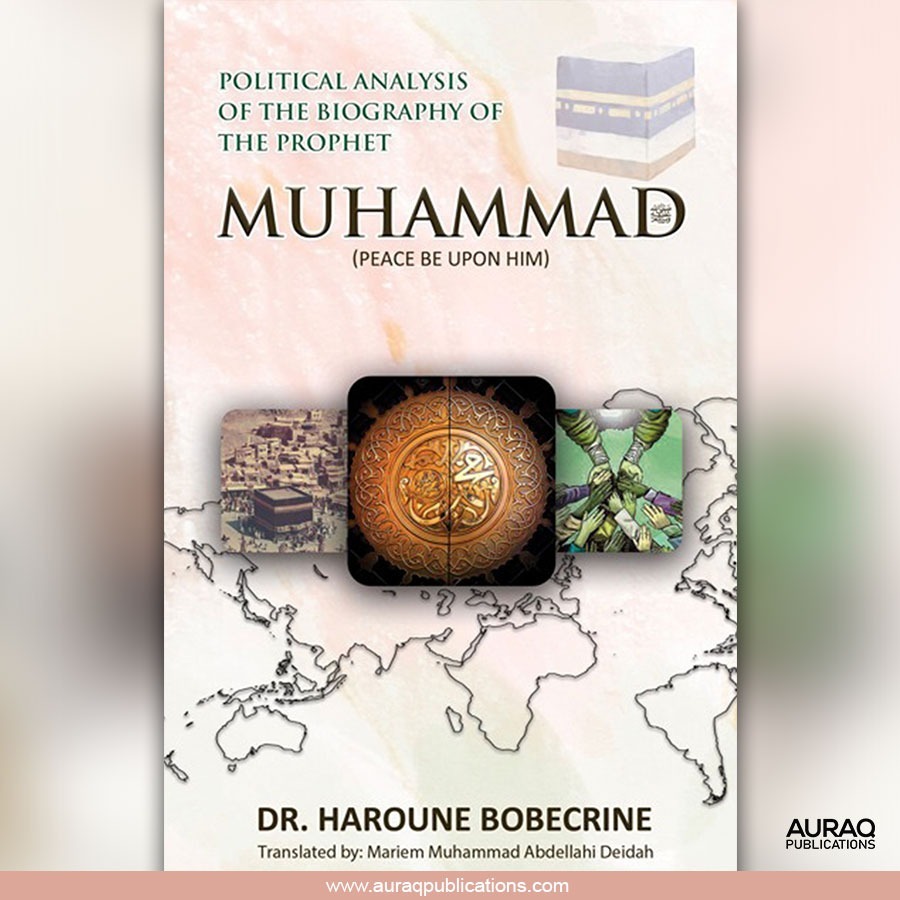
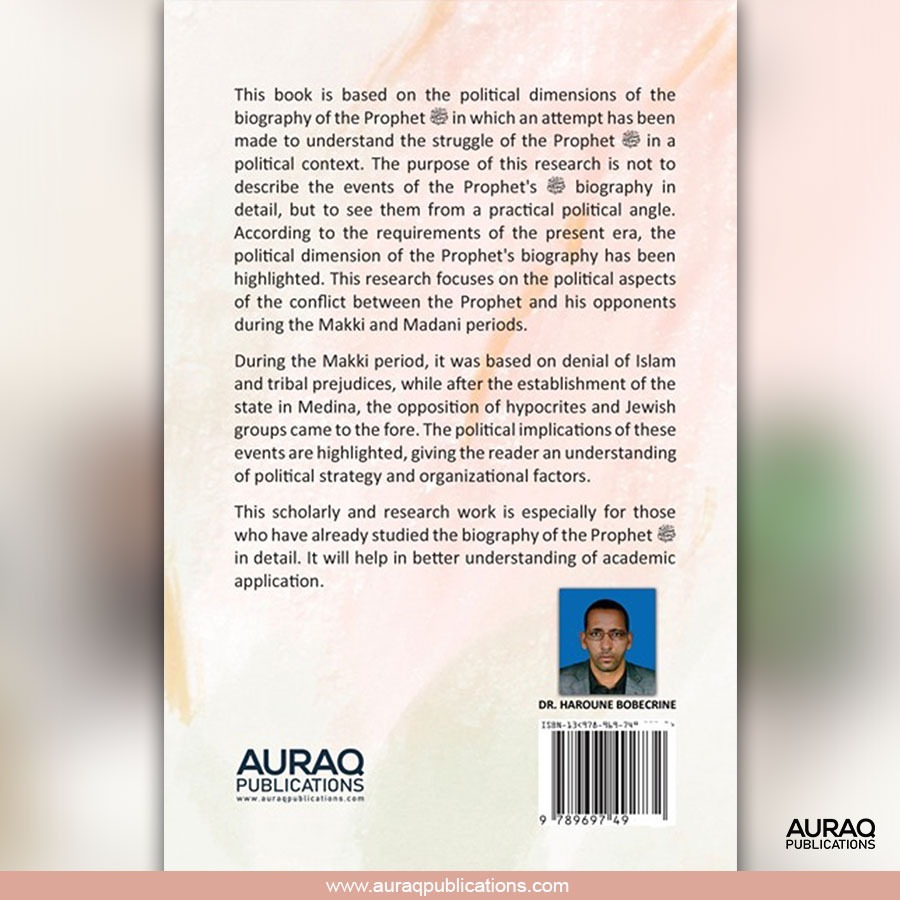
This book ‘Political Analysis of Seerah Nabvi (PBUH)’ by Dr Haroune Bobecrine offers a focused analysis of the political dimensions in the life of the Prophet Muhammad, highlighting his strategic leadership amidst intense conflict. Moving beyond the traditional accounts of his biography, it examines how he navigated a challenging landscape marked by political rivalry, tribal loyalties, and evolving alliances. The narrative begins with the early period in Mecca, where opposition to Islam was deeply intertwined with political and economic power struggles. The Quraysh tribe, driven by both religious and political motives, saw the Prophet’s growing influence as a direct threat to their authority. The study shows how the Prophet’s resistance to this hostility was not simply a matter of faith, but involved careful strategic calculations aimed at preserving his community and message.
The focus then shifts to Medina, where the Prophet’s state-building efforts faced internal opposition from hypocrites and the Jewish tribes. Here, the book explores the political complexities of maintaining stability within a diverse society, where different groups posed continuous challenges. The Prophet’s strategies in dealing with these adversaries reveal his ability to manage political dissent without undermining the cohesion of his emerging state. Key military events, such as the Battle of Badr, are analyzed through a political lens to show how these engagements went beyond battlefield victories to reshape political dynamics. These confrontations were crucial in shifting the balance of power, influencing the strategies of both the Prophet and his opponents. This period marks a critical juncture in which the Prophet’s leadership established political legitimacy and strategic dominance.
The book also briefly touches on the wars of apostasy that followed the Prophet’s death, linking these uprisings to political ambitions rather than purely religious defiance. It illustrates how these events were a test of the political stability the Prophet had built, reflecting the lasting impact of his leadership and the continuity of his political vision. By focusing on the Prophet’s interactions with his opponents, this study offers a unique perspective on how he shaped the course of political conflict in early Islam. It invites readers to understand his biography as more than a series of religious events, providing insights into the strategies that defined his leadership and the formation of the Islamic state. Whether you are a student of history or politics, this book provides an engaging look at the political foundations that sustained the Prophet’s legacy.


There are no reviews yet.