
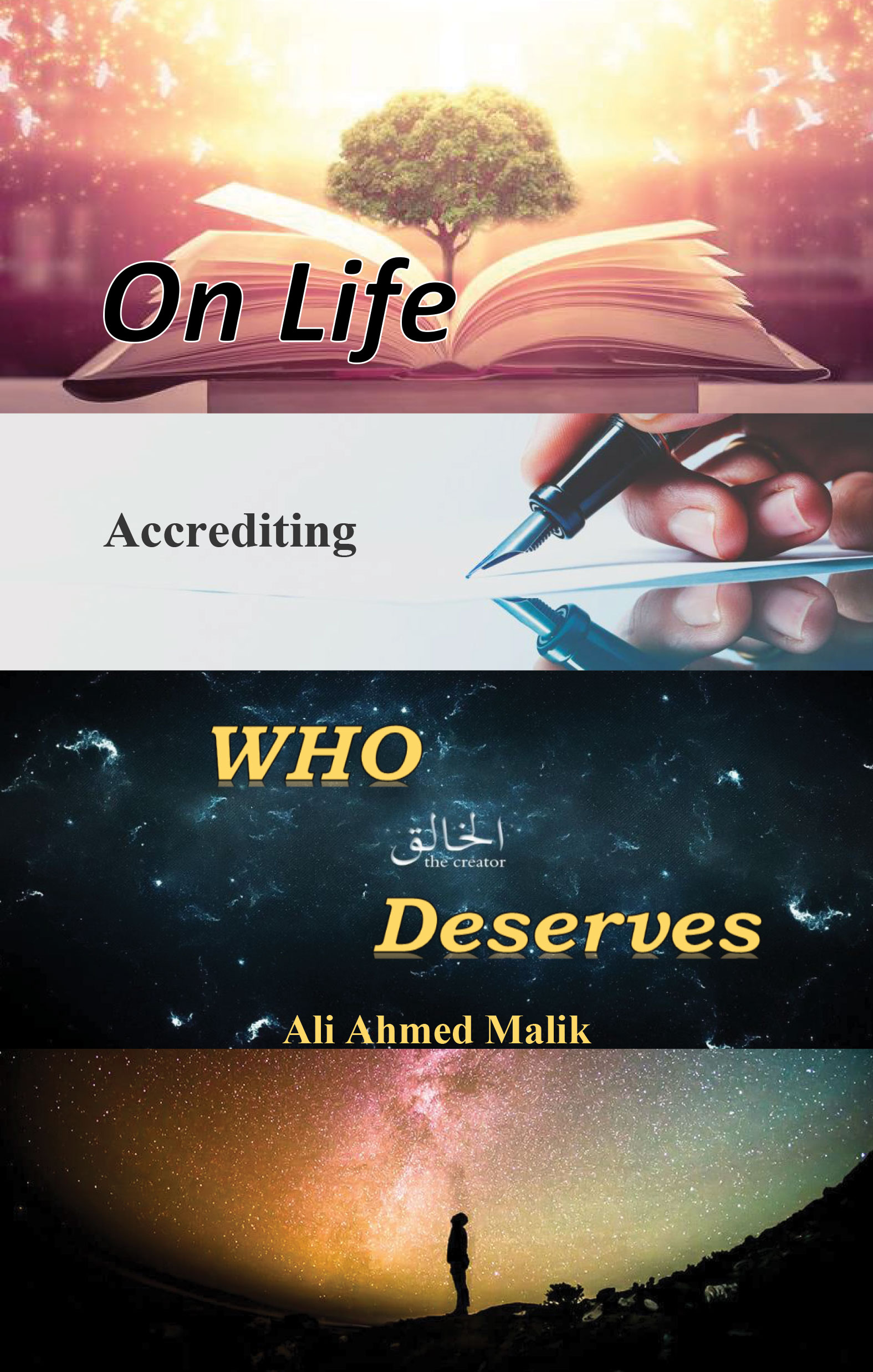
Book Review: On Life: Accrediting WHO Deserves by Ali Ahmed Malik
“On Life: Accrediting WHO Deserves” by Ali Ahmed Malik is an introspective and philosophical exploration of life’s meaning, focusing on personal growth, gratitude, and the pursuit of inner peace. Published in October 2024 by Auraq Publications, this self-published work delves deep into the human condition, asking profound questions about responsibility, happiness, and the nature of the ego. Ali Ahmed Malik, through reflective and poetic prose, invites readers to embark on a journey of self-discovery, encouraging them to embrace life’s uncertainties with grace and mindfulness.
An Invitation to Deep Reflection
From the very first page, Ali Ahmed Malik sets the tone for a contemplative and thoughtful reading experience. He does not shy away from addressing life’s most complex questions—questions that many of us grapple with but rarely have the courage to face head-on. The book opens with a meditation on the human tendency to create stories and realities based on incomplete information, a phenomenon Malik poignantly describes as the brain’s discomfort with voids. This sets the foundation for the core theme of the book: our subjective interpretations of life and how these interpretations shape our reality.
The author skillfully introduces the idea that human beings often fill the gaps in their understanding with assumptions, and these assumptions become the lens through which we view the world. This concept resonates throughout the book as Malik challenges readers to re-examine their perspectives, encouraging them to embrace the discomfort of the unknown.
A Journey from the Known to the Deeper Unknown
One of the central metaphors Malik employs in “On Life: Accrediting WHO Deserves” is the journey from the “unknown to the known” and further into an even “deeper unknown.” This idea reflects the perpetual quest for meaning that defines human existence. Malik suggests that true enlightenment comes not from reaching definitive answers, but from embracing the uncertainties of life and the continuous pursuit of knowledge.
In this regard, the book draws heavily on philosophical and spiritual traditions. Malik frequently references ideas of faith, patience, and prayer, emphasizing that these virtues are crucial for navigating the challenges of life. His writing encourages readers to find peace not in external achievements but in internal growth and understanding.
Embracing Responsibility and Letting Go of Blame
One of the most impactful sections of the book is Malik’s discussion on the human tendency to assign blame rather than take responsibility. He examines how, in both personal and professional spheres, we often find it easier to point fingers at external circumstances or other people rather than acknowledging our role in the situation. This insight is particularly relevant in today’s world, where the “blame game” often dominates social and political discourse.
Malik writes, “The perpetual desire for more, constant comparison, and the entitlement approach can make one blind to the beauty he has in his life.” This passage encapsulates his belief that dissatisfaction often stems from a lack of personal accountability. According to Malik, true fulfillment can only be achieved when we stop externalizing our problems and start focusing on the internal changes that need to be made.
This theme of responsibility versus blame is explored in several chapters, and Malik provides readers with actionable advice on how to shift their mindset. He encourages a practice of mindfulness and gratitude, reminding readers that the path to personal growth begins with an honest assessment of one’s own actions and thoughts.
The Role of Gratitude in Cultivating Peace
Gratitude is a recurring theme in “On Life: Accrediting WHO Deserves.” Malik often emphasizes that many of life’s struggles stem from a lack of appreciation for what we already have. In a society driven by materialism and competition, Malik’s message is a refreshing reminder that contentment comes not from accumulating more but from recognizing the abundance that already exists in our lives.
He quotes Cicero, who said, “Gratitude is not only the greatest of the virtues but the parent of all of the others.” Malik builds on this idea, arguing that gratitude is the foundation upon which all other positive qualities—such as patience, humility, and compassion—are built. The book encourages readers to cultivate a daily practice of gratitude, which, according to Malik, is the key to overcoming feelings of inadequacy and discontent.
In one of the most memorable sections of the book, Malik contrasts the “absence of gratitude” with the “presence of gratitude.” He presents this concept through a series of simple yet profound examples, demonstrating how a shift in perspective can transform one’s entire experience of life. Whether it’s appreciating a job, a relationship, or even the challenges we face, Malik argues that gratitude has the power to change our mindset and, ultimately, our reality.
Ego and Its Role in Human Suffering
A significant portion of “On Life: Accrediting WHO Deserves” is dedicated to the exploration of the ego and how it shapes our lives. Malik provides a nuanced analysis of the ego’s role in human suffering, suggesting that much of our discontent stems from the ego’s need for validation and superiority. He introduces readers to the concept of “ego identification,” where individuals become so attached to their perceived identity that they lose sight of their true self.
Malik uses the metaphor of two wolves—the black wolf representing the ego and the white wolf symbolizing the soul—to illustrate the internal conflict that exists within every person. This story, borrowed from Native American folklore, serves as a powerful reminder that we have the power to choose which aspect of ourselves we nurture. By feeding the white wolf, we can cultivate virtues like love, compassion, and humility, while starving the black wolf allows us to overcome fear, anger, and jealousy.
On Choices and Their Consequences
Throughout the book, Ali Ahmed Malik places a strong emphasis on the importance of choices. He argues that every decision we make, no matter how small, has a ripple effect on our lives. He draws inspiration from the famous lines of Robert Frost’s poem, “The Road Not Taken,” to illustrate the profound impact that choices can have on our personal and spiritual growth.
Malik reminds readers that not choosing is itself a choice. He writes, “Not choosing, delaying, or staying where we are, are also choices.” This insight challenges the reader to take control of their destiny by making conscious, intentional decisions rather than passively allowing life to happen to them.
The book also touches on the concept of fate, exploring the delicate balance between what we can control and what is beyond our power. Malik encourages readers to accept the things they cannot change while taking responsibility for the things they can. This message resonates deeply in today’s fast-paced world, where many people feel overwhelmed by the constant pressure to achieve and succeed.
Writing Style and Structure
Ali Ahmed Malik’s writing style is reflective and poetic, with a calm, meditative tone that complements the book’s philosophical themes. The structure of the book is well-organized, with each chapter exploring a different aspect of life’s journey. Malik’s use of anecdotes, quotes from historical figures, and spiritual wisdom adds depth to his analysis, making the book both informative and inspiring.
The layout of the book, coupled with its straightforward prose, makes it accessible to readers from various backgrounds. While the content is deeply philosophical, Malik ensures that his ideas are presented in a way that is easy to grasp, making “On Life: Accrediting WHO Deserves” suitable for both casual readers and those seeking more profound personal growth.
A Thought-Provoking Read from Auraq Publications
Self-published through Auraq Publications, On Life: Accrediting WHO Deserves by Ali Ahmed Malik is a shining example of the impact independent publishing can have. This collaboration with Auraq Publications has produced a refined, thought-provoking book that’s a must-read for anyone interested in personal growth, spirituality, and philosophy. Released in its first edition in October 2024, the book makes a meaningful contribution to the self-help and philosophical genres.
Conclusion: A Must-Read for Seekers of Inner Peace
In “On Life: Accrediting WHO Deserves,” Ali Ahmed Malik offers readers a thoughtful guide to navigating life’s complexities with mindfulness, responsibility, and gratitude. His insights into the human condition are both profound and practical, making this book a valuable resource for anyone seeking to live a more intentional and fulfilling life.
Whether you are at a crossroads in your personal life or simply looking for a deeper understanding of the world around you, Malik’s book provides a roadmap to greater self-awareness and peace. With its blend of philosophical reflection and actionable advice, “On Life: Accrediting WHO Deserves” is a must-read for anyone on the journey of personal growth.

A thought instrigating insight of achieving peace and satisfaction in one’s life. Realities of life are beautifully explained. Reader feel energetic and thankful his Lord for countless Blessings. A lovely and must read book. Best wishes for success in future for author “Sir Ali Ahmed Malik”
From review, the book forebode all a man needs in daily life, inner peace, personality growth, taking responsibilities and battling routine issues. I know Malik and he always produces remarkable work.
I would love to read this book.
A beautiful book by a intelligent writer